
Designed & maintained by Carol Gingell

© C.Gingell 2006-
© Broadland Memories 2006-


 Pre 1900 History
Pre 1900 Memories
Pre 1900 History
Pre 1900 Memories
Pre 1900 Photo Gallery

The River Wensum at Norwich looking towards Foundry Bridge c1890s. The building on the left, closest to the bridge is The Great Eastern Hotel which was built c1850 and survived until its demolition in 1963. Moored on the right is the passenger steamer “The Jenny Lind” which was built in 1879 and ran regular trips between Norwich and Bramerton Woods, Reedham, Oulton Broad and Great Yarmouth.


This is the Pleasure Boat Dyke at Hickling pictured c1890s, looking back towards the Broad itself. The photograph is believed to have been taken from the spot where the restaurant extension for the Pleasure Boat Inn now stands.

The wherry “Harriet” pictured at the old Ludham staithe in 1898

The photograph above is a very rare image of the original three arch stone bridge at Beccles and dates from c1870s. The photographer is unknown, but it is believed to have been taken from a building which once stood on the quay, looking upstream, the Ship Inn can be seen on the left. Records show that the bridge was built c1268, although there had been evidence of a ferry crossing at this point from c1000. The bridge was demolished in 1880, the new iron bridge was constructed in 1881 and is the one which still survives to this day. In the background you can also see the old rail bridge which crossed the river as part of the Waveney Valley Rail line.
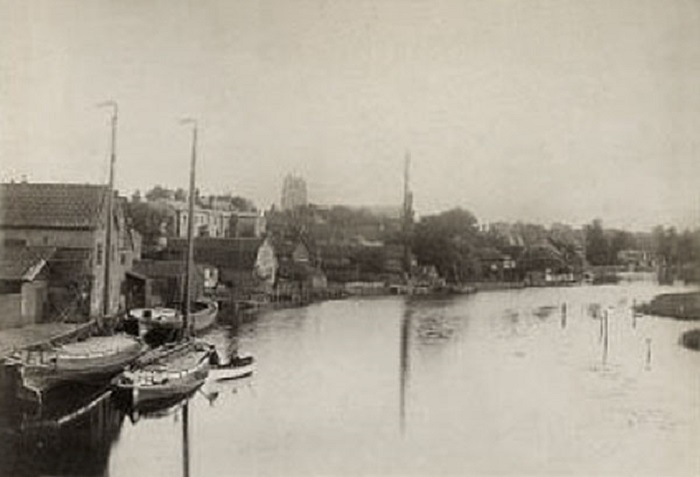
Another view of Beccles, looking upstream from the old railway bridge c1880, photographed by George Christopher Davies.
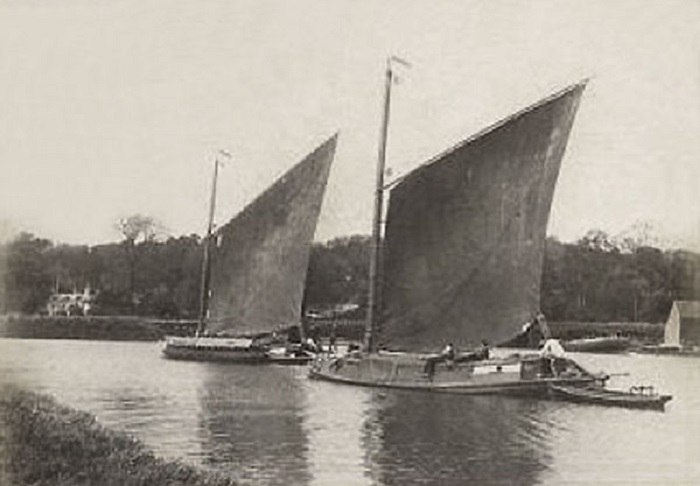
A pair of trading wherries at an unknown location c1880.
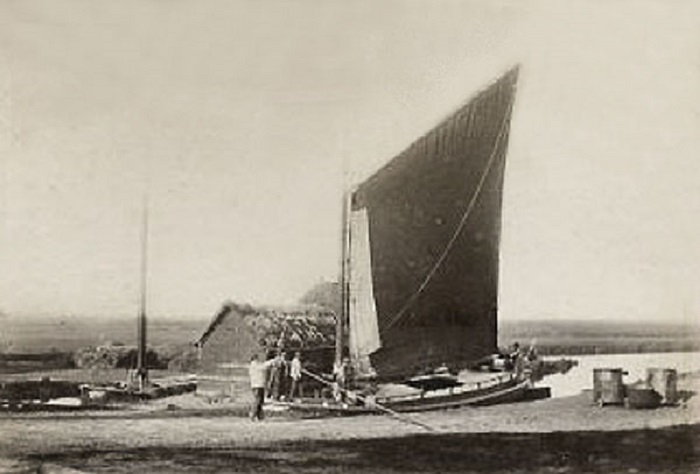
A trading wherry photographed at Barton Turf Staithe by George Christopher Davies c1880.
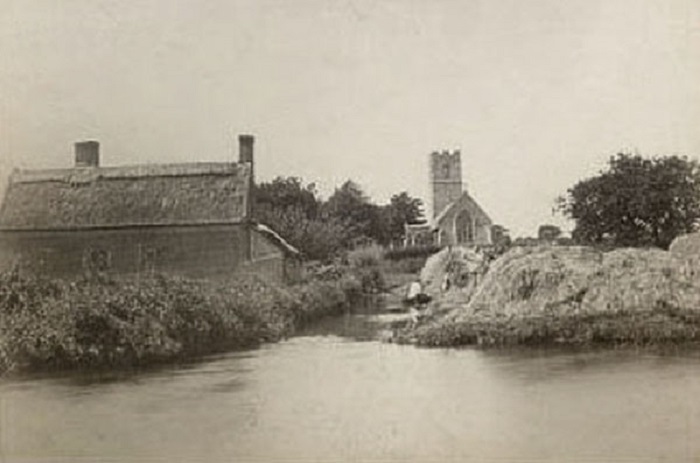
Irstead Staithe and St. Michael’s Church, also by George Christopher Davies c1880.
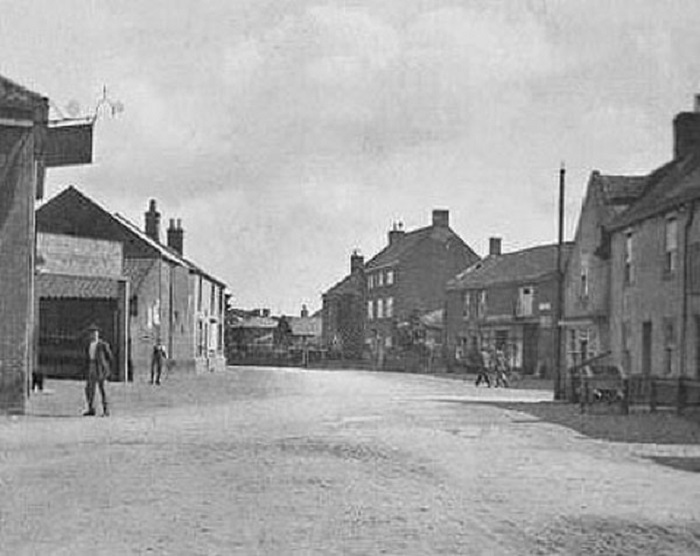
Looking North on The Street in Ludham, pictured c1890s with the Kings Arms pub on the left with Throwers stores opposite.
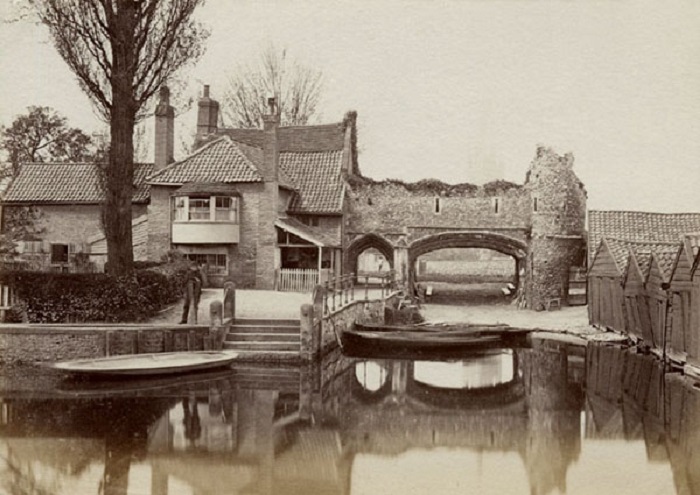
Pulls Ferry on the River Wensum at Norwich c1890s.
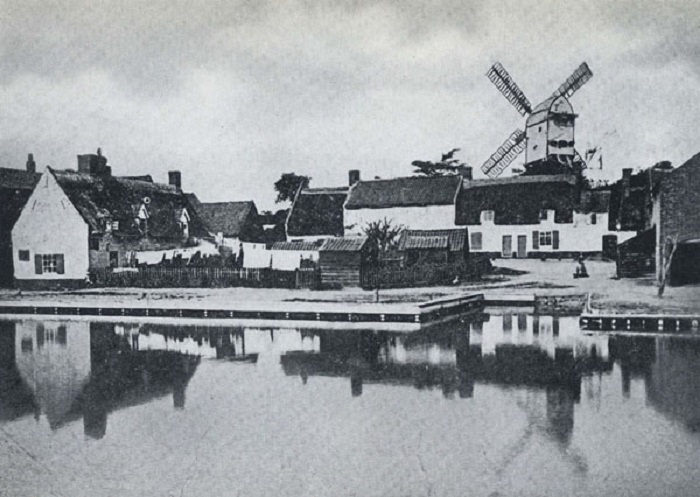
Horning riverfront and windmill photographed by George Christopher Davies in the1870s. The mill was demolished in 1879.

Looking upstream, towards Swan Corner at Horning c1890s. The building nearest the river, on the left, is the old flour mill which stands roughly where the Southern Comfort now moors. Opposite, is the original Swan Inn which was replaced by the current Swan Hotel in 1897. The old Swan Inn was built in the 17th century, apparently using stone and rubble from St. Benets Abbey. Many fine stone carvings from the abbey were found when the Inn was demolished. The buildings in the foreground were the village Malthouse.

Another photographs of Horning from the 1880s, looking downstream with the maltings on the left.

Another view of Horning c1890 showing the flour mill, the old Swan Inn and the Malthouse.
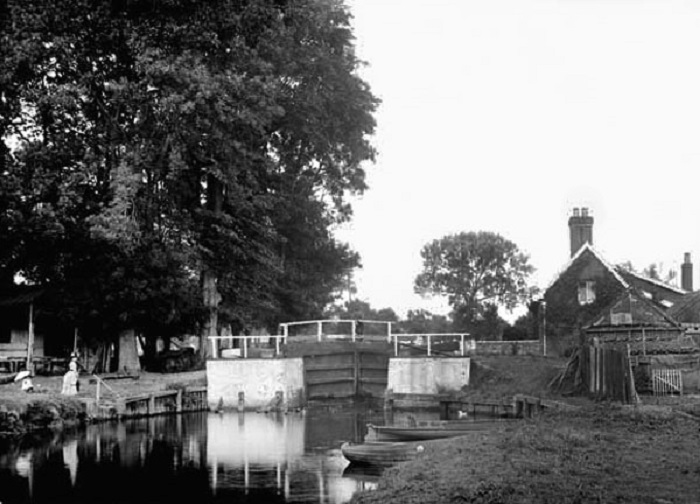
The Lock and lock keepers cottage at Coltishall c1890s. The lock was destroyed in the 1912 floods as water surged down the Bure.
The following collection of images were taken by the photographer John Payne Jennings c1890. In the mid 1880s, Payne Jennings was commissioned by the Great Eastern Railway Company to produce a series of photographs which were displayed on the carriage walls of their trains to promote rail travel to the Broadland area. In 1891 he published a set of 101 photographs of Broadland in a book entitled “Sun Pictures Of The Norfolk Broads”, printed by his own company in Ashtead, Surrey . The following selection are taken from that book. His images captured picturesque scenes of the rivers and villages and helped to attract many holidaymakers to the area. The book was republished in the following year with the addition of descriptive text by the author Ernest Suffling who was already known for his “Land Of The Broads” tourist guide, the first edition of which had been published in 1885. In 1897 Payne Jennings published a smaller collection of photographs of Broadland in the book “ Photo Pictures Of East Anglia”, and also produced photographs for other rail companies between the 1880s and early 1900s. Born in 1843, and having lived in both Dublin and London during his life, he moved to Ashtead in Surrey c1890 and lived there until his death in 1926.

The Church of St. Peter at Belaugh. In his accompanying text, Ernest Suffling said of the church; “It is commandingly on an eminence overhanging the Bure which is hereabouts very pretty. The river between Wroxham and Belaugh winds three parts of a circle, so that one if pulling in a dingy, is often led to wonder if he will ever reach the church, which by river is no less than four miles. The vicarage garden is in summer a very pretty sight, as it skirts the river for some distance.”
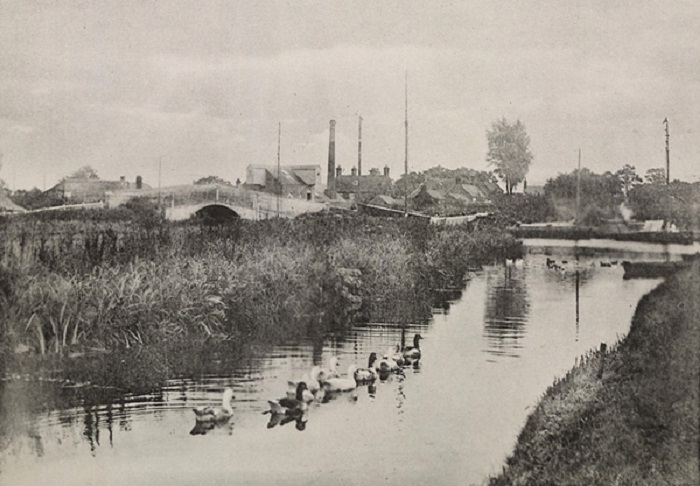
This view of Wroxham and Hoveton shows a very different scene to that which we know today. Photographed from what is now part of the Broads Tours yard and looking across to where the Hotel Wroxham now stands, the area was somewhat more industrial than it is today. This dyke became part of John Loynes yard in the 1880s when he moved his boat building and boat hire business from Norwich. Over the following 30 years, the area changed dramatically as boatyards including The Norfolk Broads Yachting Company, Robert Collins and subsequently his sons Ernest and Alfred, George Press and Jack Powles sprang up along the riverside as the interest in boating holidays on the Broads boomed. In Sun Pictures Of The Norfolk Broads, Suffling noted; “This is the favourite embarking and disembarking place for yachtsmen who make Wroxham their head-
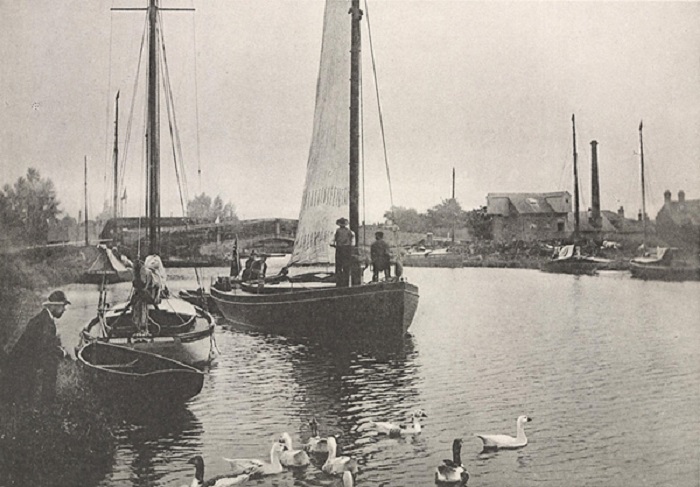
Another view of Wroxham Bridge. Suffling continued; “This bridge is the Ultima Thule of most yachts, as after passing Wroxham village the river rapidly narrows, and gets shallow also, but what it lacks in breadth it gains in beauty, and the next seven miles, to the pretty village of Coltishall, is exceptionally picturesque. No vessel drawing more than three feet of water should attempt to make the trip above bridge, or they will assuredly touch bottom in places and possibly cause a lot of trouble before the voyageurs can regain deep water. Beware of the sails and gear against the overhanging branches of the trees, which in many places grow quite at the water’s edge.”

Wroxham Regatta pictured in the late 1880s.

This view of Horning shows the original Swan Inn and the flour mill which once stood on the corner.

The Ferry Inn at Horning. Suffling told us; “This hostelry divides with ‘The Wherry’ Inn, at Oulton, the honour of being the most popular in the Broads. Thousands of yachts pass Horning every season and many of them moor and refresh their crews here. It is a well-

Of Ranworth, Suffling said; “Is a pretty, rustic village, with nothing whatever of the modern about it, either in architecture, aspect or manners. All are rural, quaint, quiet and decorous.”
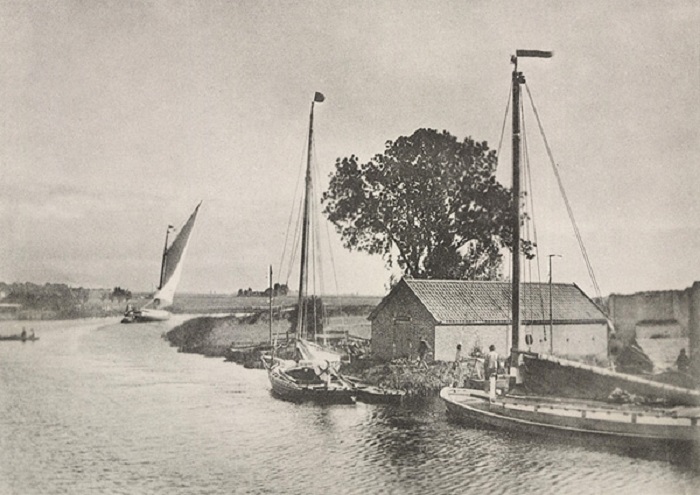
Express Wherry leaving Acle Bridge. Suffling’s accompanying notes stated that; “With a fair wind she is about to traverse the 12 miles of river which lie between Acle Bridge and Yarmouth. For flat marshland, with its hundreds of cows, it would be difficult to match this dozen miles of water-