
Designed & maintained by Carol Gingell

© C.Gingell 2006-
© Broadland Memories 2006-


 1900-1949 History
1900-1949 Memories

1900-
More of the Andrew Day collection of photographs which were taken in 1936

A busy river scene photographed in 1936.

The Stracey Arms Mill, also pictured in 1936.
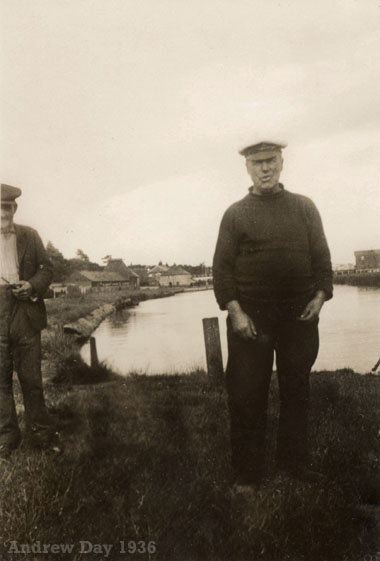

Two local characters, pictured on Reedham Quay in 1936. The signal box and swing bridge can be seen in the background and in the distance on the left is the Ship Hotel. Also seen on the left is the old maltings building. During the 1930s, the maltings buildings were used as a bottling plant for a local wine merchant and then became a mushroom factory . During the 1960s and 1970s it was the site of the Reedcraft boatyard -
Two of the crew pose outside the Lord Nelson public house in 1936. Kelly’s directory lists the licensee at this time as being William Weldon James Pit. On the far right of the building was a garage which is now part of the pub, but was apparently sometimes used as a mortuary according to local historian Sheila Hutchinson in her book “Reedham Remembered”. The sign for “Teas with Hovis” probably relates to the building on the right, adjacent to the pub, which was a cafe at this time.
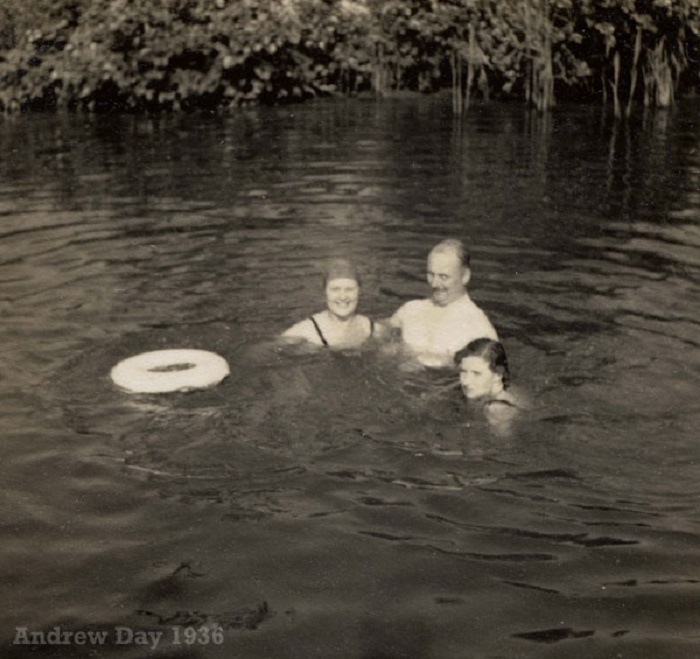
The final photograph from the 1936 collection shows three of the crew enjoying a dip in the river.
The next small collection of photographs were taken during two summer holidays spent at Great Yarmouth in 1908 and 1909 and were taken by Harry Caston. The photographs were accompanied by some holiday notes written on the backs of postcards by Harry’s fiancee, Lily Child, which document what the family did whilst in the area -

Harry Caston and his fiancee Lily Child pose for the camera on the beach at Great Yarmouth in 1909.

St. Olaves was a popular destination for day trips from Great Yarmouth and the Caston family visited the village several times during their holidays. This was one of three photos taken at St. Olaves in 1909 -

Another photograph taken at the same location in St. Olaves, looking across the River Waveney.

The third photograph taken by Harry Caston at St. Olaves in 1909 features Ernie with Florrie and Lily -
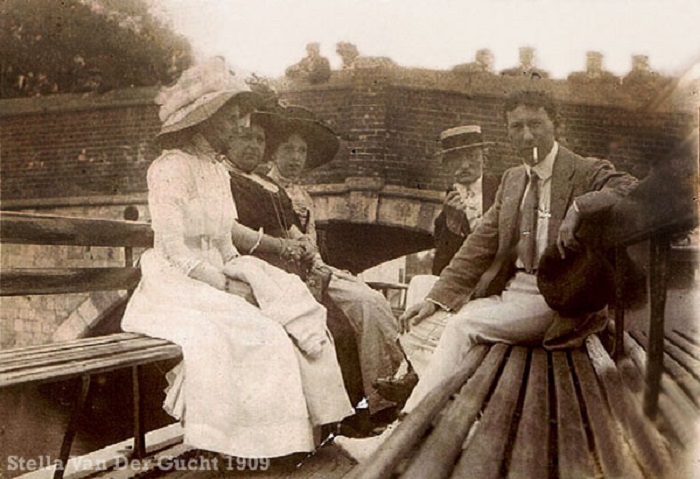
The holiday notes written by Lily made mention of a boat trip from Great Yarmouth to Wroxham in August 1909 and this photograph was taken on that trip, with Wroxham Bridge seen in the background. It is most likely that the boat would have been the famous passenger steamer the “Queen of the Broads” and the return trip would have cost 1/6 per person at this time.


The family also visited the roman ruins at Burgh Castle in 1908 and Harry took this photograph of Burgh Castle Tower Mill which was demolished c1925.
Lily’s widowed mother, Ann Child, also holidayed in the area at the same time as the Caston family, staying in apartments in Lowestoft with two of her other daughters. Pictured in front of the bandstand in Belle Vue Park at Lowestoft in 1909 are: Henrietta Child, Ann Child, Edith Child and Lily Child.
The following collection of photographs were sent to me by Doug Pleasants and they document a holiday taken by his father, Geoffrey, in 1932 with a group of friends. After the war, Geoffrey Pleasants became a publican, running the Kings Head at Wroxham between 1948 and 1956 before becoming proprietor of the Maltsters at Ranworth between 1956 and 1962. It was Geoffrey who commissioned H.T. Percival’s yard at Horning to build the famous boat bar which graced the Maltsters for many years. Geoffrey also took on the original Wayford Bridge Inn in 1957, buying it from the brewery in 1962 when it was de-
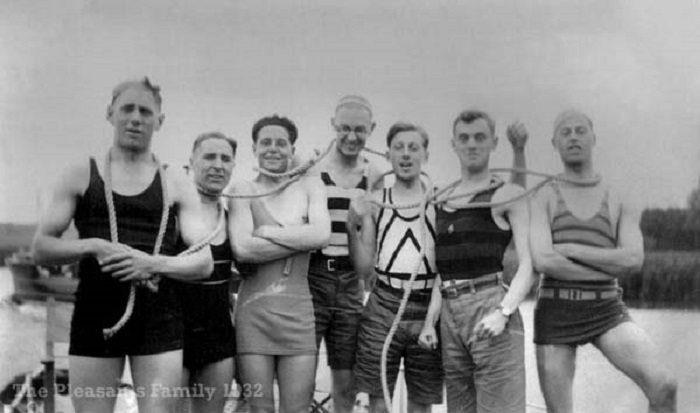
A fine collection of bathing costumes on display on the Norfolk Broads in 1932.

The group of friends hired the wherry yacht Olive from Ernest Collins at Wroxham for their holiday in 1932. The hire terms were between £17 10 shillings and £26 10 shillings for a week which included the services of two attendants.
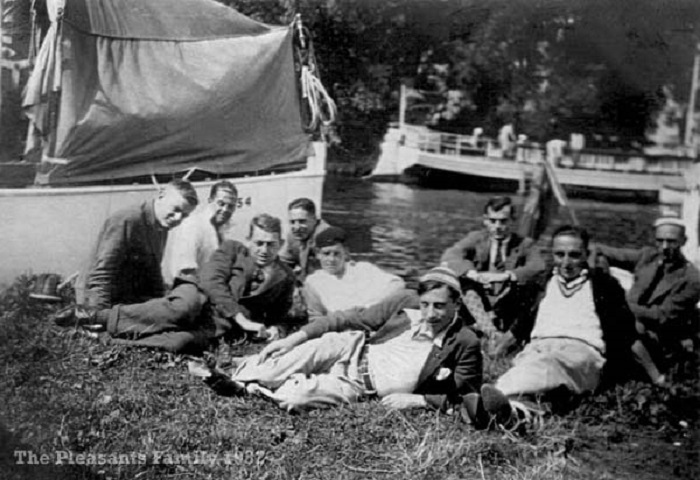
Relaxing on the riverside at an unknown location in 1932. The large vessel seen in the background was the ex Thames spritsail barge “Federation” which had been bought by Frederick Miller of Oulton Broad in the early 1920s and converted into the luxury, floating hotel “Pauline” upon which one to three week, fully inclusive tours of the Norfolk and Suffolk Broads were conducted. A crew of three – the skipper, a steward and stewardess, were in attendance throughout the holiday and places on board could be booked as an individual or as a group. There were six single cabins, two double berth cabins and one with three singles which were all fitted with a wash basin. There was a large galley and spacious saloon which seated the whole party for meals which included breakfast, lunch, tea and dinner and consisted of “good homely catering” according to contemporary adverts. It was also noted that evening dress was not expected to be worn by guests! Pauline was fitted with electric lights throughout and a “good wireless set” was provided. In 1933 the terms, including board and attendance, were between £4 10 shillings and £5 10 shillings per person, per week. Fred Miller ran Pauline until the outbreak of WW2 in 1939 after which she was sold to a family who lived on board at Oulton Broad for a while. She apparently ended her days being used as staging on Barton Broad.


Posing for the camera.
Fishing at Ludham Bridge.


Gathering on the cabin roof for a photograph.
A bit fuzzy, but I had to include the obligatory life ring shot!

More fishing! This looks as though it was taken at Coltishall, just upstream of the Rising Sun.
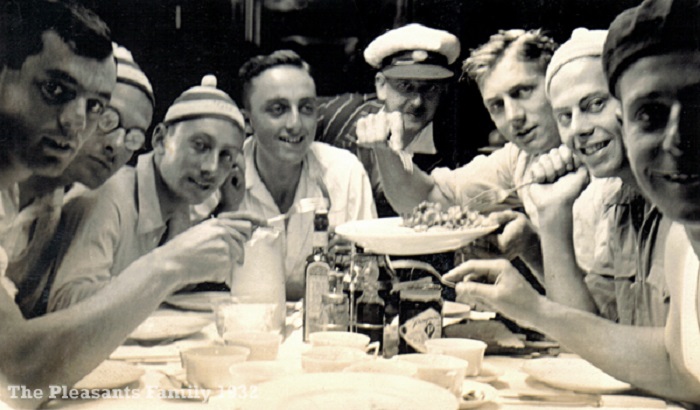
The final shot of the crew was taken in Olive’s saloon.