
Designed & maintained by Carol Gingell

© C.Gingell 2006-
© Broadland Memories 2006-


 1900-1949 History
1900-1949 Memories
1900-1949 History
1900-1949 Memories
1900-
Page 41, 42




The first photograph from 1930 was taken at Horning. Unfortunately, I can’t positively identify the passenger launch, but it could be one of George Smith’s or William Littleboy’s fleet, both of whom were based at Wroxham. Regular daily, and afternoon trips were conducted, taking in the sights of the River Bure between Wroxham and South Walsham Broad.
Another photograph taken at Horning, looking downstream on the River Bure. A contemporary advertisement leaflet for Littleboy’s offered two different trips. For five shillings, passengers could take a full day excursion, visiting Salhouse, Ranworth and South Walsham Broads, St Benet’s Abbey and Horning village. An hour lunch stop was made at Ranworth with a half hour tea stop at Horning. An afternoon trip of two and a half hours cost three shillings and sixpence, cruising to Salhouse Broad and Horning, with tea served on board.
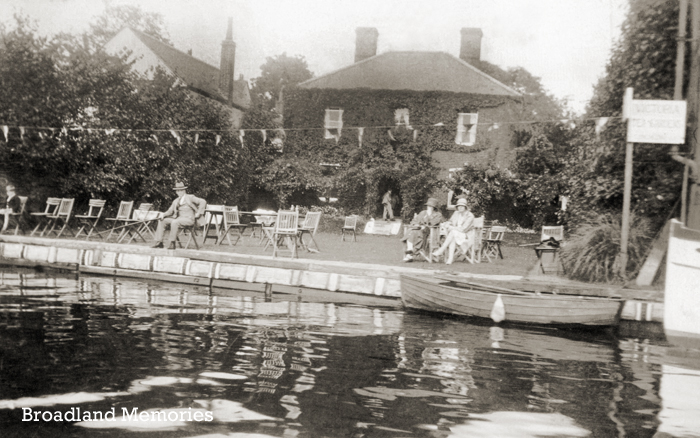
This also shows the riverside at Horning, the sign advertising this as being the ‘Victoria Tea Rooms’. The tearooms were located just downstream from Banham’s boatyard.
Another photograph taken whilst cruising through Horning in 1930. In the distance, you can see the distinctive Dutch barn style boatsehds of H.T. Percival’s boatyard. The houseboat you can see just before those sheds was ‘Lamorna’, owned and operated by Banham’s boatyard. The 30ft houseboat slept up to 6 people and cost around £8 to hire for a week during the summer of 1930.
Another photograph taken whilst underway in August 1930. Riverside bungalows -
The last photograph from the 1930 collection was taken on the approach to Wroxham Bridge. Interestingly, the burgee seen on the front of the launch almost looks like a Percival’s flag. I’m not sure if Percival’s yard were running passenger trips from Horning at this time?
You can find out more about some of the passenger launches which were operated by Littleboy, Smith and Charles Hannaford’s Broads Tours business at Wroxham by using the search facility at the top of the page.


Taken at Thorpe St Andrew, with Hart’s boatyard seen in the background, this shot features Margaret’s mother and two friends.
Another photograph taken at Thorpe St Andrew in the early 1930s. Margaret’s father can be seen in the hat. Once again, you can see the fleet of G.Hart and Son lined up alongside the boatyard in the background.
This was the motor cruiser ‘Venture’, 32ft in length and sleeping up to six people. A week’s hire in 1933 cost between £11 and £15 per week. Margaret thinks her dad is seen here, so I wonder if this was from a different trip, taken with friends before he was married.
This was one of the ‘Diamond’ class of motor cruisers from Coltishall. Built in 1928, these slept up to six people but had disappeared from Blake’s brochure by 1933. Margaret doesn’t recognise anyone on board, so it may also have been taken by her father during a separate holiday.
Margaret’s mother and her friend pictured aboard the motor cruiser ‘Superb’ which was built by George Smith at Hoveton. 26ft in length, sleeping four people in two cabins, ‘Superb’ cost £12 to hire during the peak summer weeks of 1933.
Margaret’s father being towed in the accompanying dinghy.
Margaret’s mother takes the chance to be photographed whilst being towed in the dinghy too in the final photograph from the set.





‘Hathor’ moored at an unknown location during the day trip.
Helen Skillern (Watson) pictured on the left with her friend Dorrie. The pair worked together at the Education Office.


Helen Skillern (Watson) pictured on the left with family members on board ‘Hathor’. Next to her is Ernest Williamson, then Annie Riches with Helen’s mother -
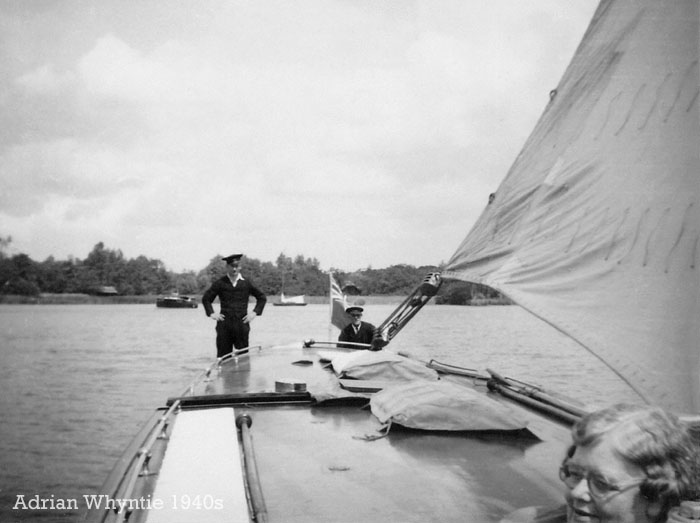
The skipper and mate onboard ‘Hathor’.
The skipper, mate and Helen Skillern (Watson) at the helm of ‘Hathor’.
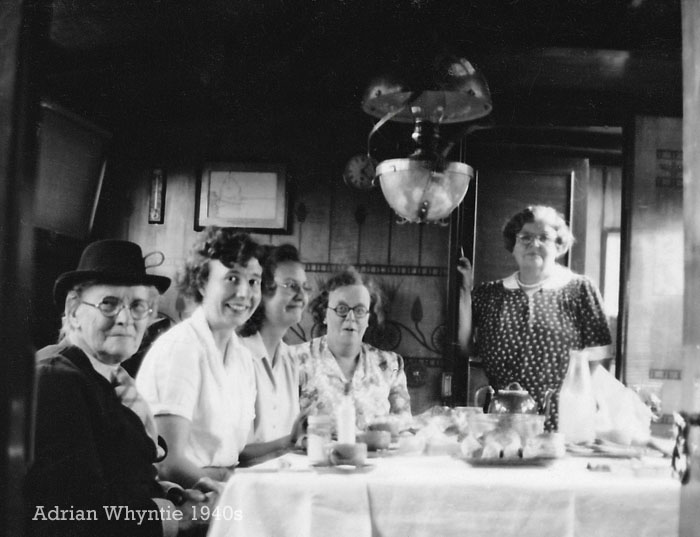
In the last photo in this set, the group are seen having afternoon tea in Hathor’s saloon. You can see the intricate, and very beautiful interior walls and doors in the background, decorated with an inlaid, Egyptian inspired design featuring lotus flowers, birds, animals and other symbols. From left to right are: Annie Riches, Helen Skillern (Watson), her friend Dorrie, mother Helen and aunt Kathleen Williamson.
This page includes photographs from four different, smaller collections of photographs dating from the 1930s and 1940s. The first set are dated to August 1930 and document a cruise aboard one of the large Broads passenger cruisers.
The following seven images were submitted by Margaret Purnell and document holiday’s on the Broads taken by her parents in the very early 1930s.
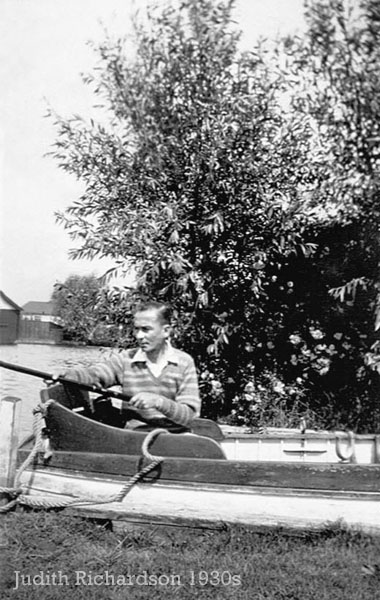
The following four photographs were sent in by Judith Richardson. They were taken during a more land based holiday at Potter Heigham in the 1930s.
The holiday party standing in the garden of what is presumed to be the riverside bungalow in which they were staying at Potter Heigham. You can just see the distinctive roof of ‘Dutch Tutch’ in the background,on the right.
Ralph Richardson, pictured whilst fishing at Potter Heigham in the 1930s.
Another photograph taken at the same time as the previous image.
The final photograph from this small set was presumably taken on the River Thurne, not too far from Potter Heigham.
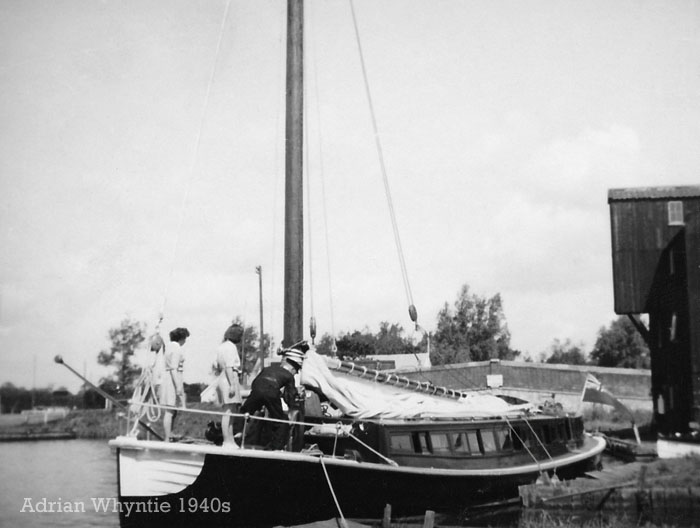
The fourth collection of photographs on this page were submitted by Adrian Whyntie. They belonged to his late mother Helen Watson (nee Skillern) and were taken during a day trip out with friends and family on the pleasure wherry ‘Hathor’ in the 1940s, post WW2. One of the party is believed to have worked for the Boardman family at How Hill.
The skipper, and two of the group, pictured on board ‘Hathor’ alongside the old granary at Hoveton. Wroxham Bridge can be seen in the background. ‘Hathor’ was built by Daniel Hall at Reedham in 1905 for Ethel and Helen Colman, daughters of the Norwich mustard magnate, Jeremiah Colman. The pleasure wherry was a tribute to their brother, Alan, who had died of tuberculosis during a trip to Egypt in 1897. Another of Jeremiah’s daughters, Florence, married the architect Edward Boardman, who designed and built the house at How Hill for his family.