
Designed & maintained by Carol Gingell

© C.Gingell 2006-
© Broadland Memories 2006-


 1900-1949 History
1900-1949 Memories
1900-1949 History
1900-1949 Memories

1900-
Continuing with the c1900 photograph album which documents a holiday taken aboard the yacht “Test”.

“Beccles” – Whilst William Dutt didn’t necessarily rate the town centre of Beccles, he was a little more complimentary about the riverside which was; “of interest on account of the picturesque character of much of that part of the town which slopes down to the banks of the river just beyond its road and rail bridges. Here, the old malthouses, boatyards, gardens, brightly painted wherries, some fine old trees, and two or three houses of quaint styles of architecture, make a series of riverside pictures worthy of an old Dutch town.”

“Yacht Judge at Beccles” – I’ve been unable to find any information on ‘The Judge’.
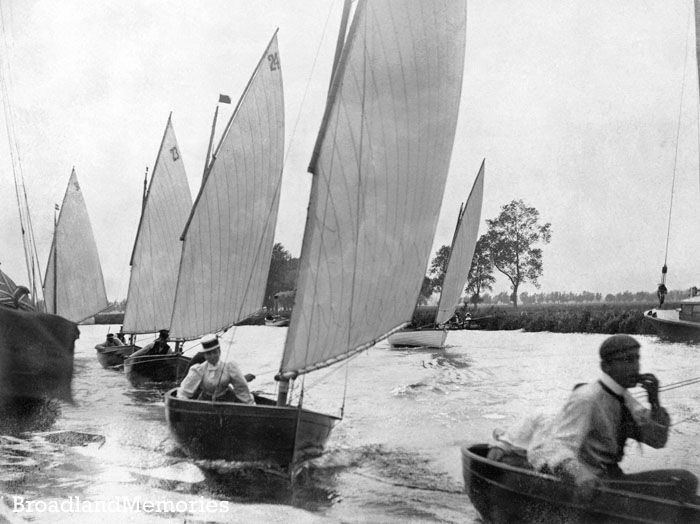
“Jolly boat race Beccles” – Did the holiday party visit during Beccles Regatta or was this an impromptu race I wonder.

“Stokesby Ferry”-
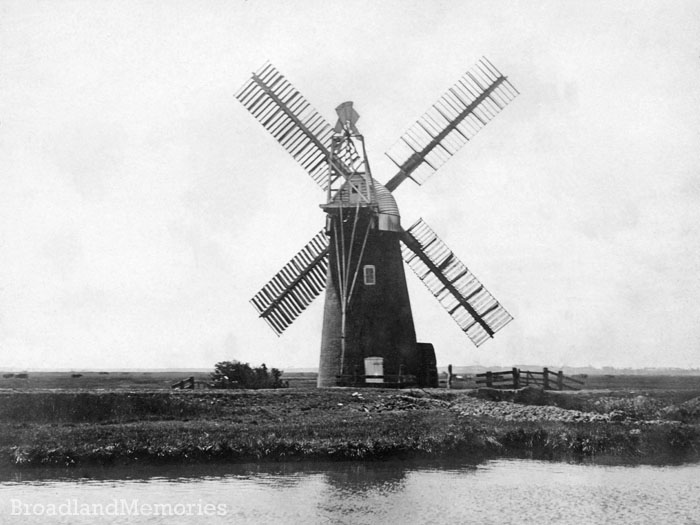
“Mill on River Ant” – I suspect the caption on this is actually wrong as it doesn’t appear to match any of the known mills which stand, or once stood, on the River Ant. As they already photographed Ludham Bridge south mill (Later known as Beaumont’s Mill), I’m certain that it isn’t that one as there are differences, most noticeably in the window style. The closest match I’ve been able to find is Six Mile House Mill on the River Bure at Halvergate, a contemporary image of which elsewhere online shows very similar looking rustic fencing to that seen here.
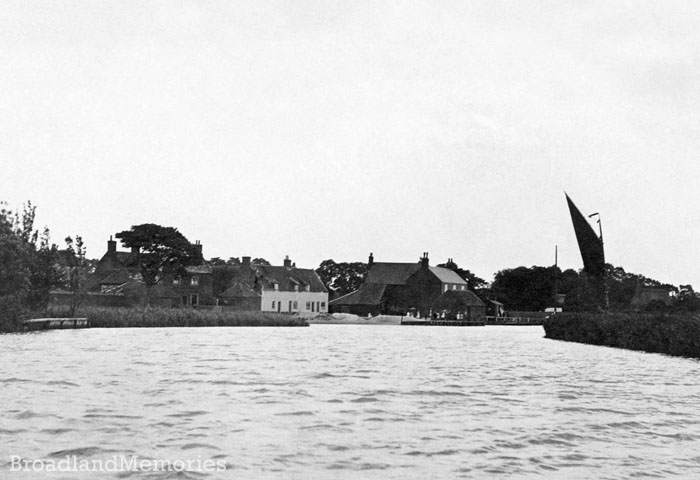
“Stokesby Ferry” – Looking back towards Stokesby, black sailed trader approaching.
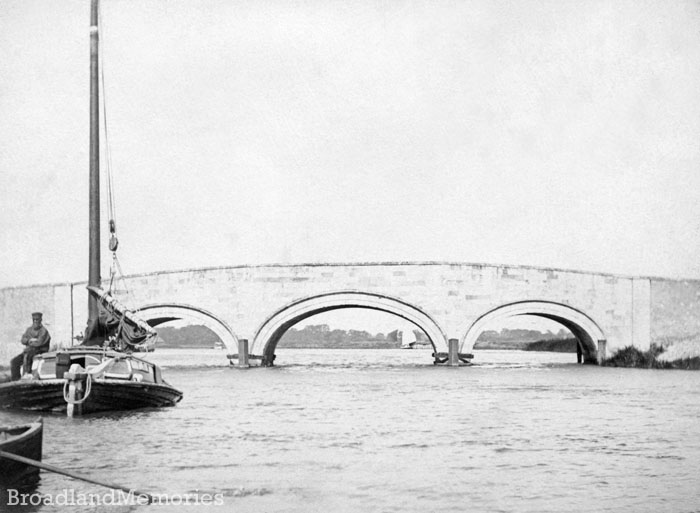
“Acle Bridge” – Looking upstream towards Acle bridge with a heavily laden trading wherry moored on the left, alongside the Angel Inn (now the Bridge Inn). Back to William Dutt in 1903: “All through the summer a good many yachts are moored above and below Acle Bridge, and on regatta day a lively scene is presented around the well known Angel Inn. Some cruisers prefer it when only a few wherries are moored at the staithe below the bridge, urging that wherries are more in harmony with the weather-

“Test and Restless at Ludham Bridge” -
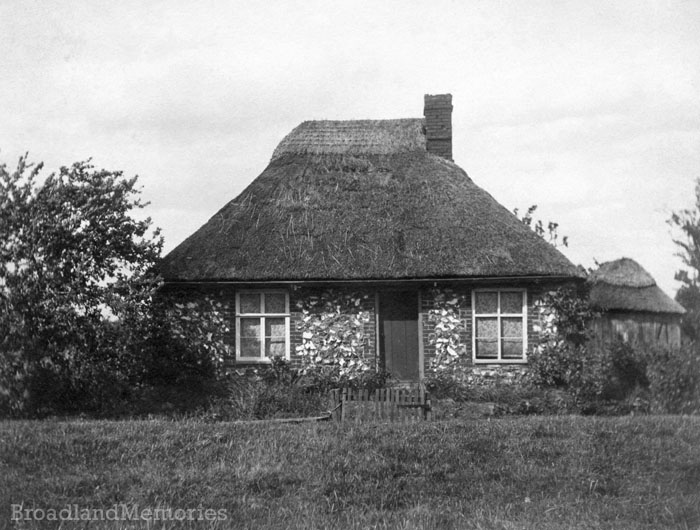
“Cottage at Ludham Bridge” – This little cottage stood on the northern bank, between the bridge and the South Mill.

“South Walsham Church” -

“Valentine near Ranworth” – Once again, I’ve been unable to find any information on ‘Valentine’.

“Wroxham Bridge” – John Loynes boatyard on the left and the Norfolk Broads Yachting Company on the right.
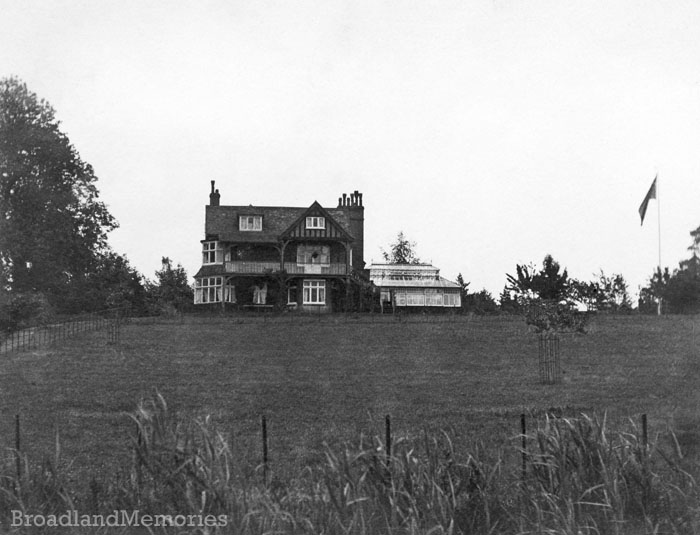
“Houseboat House near Wroxham” – My thanks to Trevor Curson for getting in contact to tell me that this is ‘Bureside’ which stands in Skinners Lane at Wroxham. Built c1889, this grand house with it’s large glasshouse also had tennis and croquet lawns, a paddock and stabling, kitchen garden, herbaceous and rose gardens, a rustic summerhouse and water gardens leading down to the river where a large boat house could be found. Trevor also happened to have a copy of the auction brochure for the property when it was sold in May 1920 which includes photographs of the house and surrounding countryside, plus the original bill of sale from that auction for the purchaser, Major S. Trafford. A PDF version of this can be found within the Paper & Ephemera section of the website.
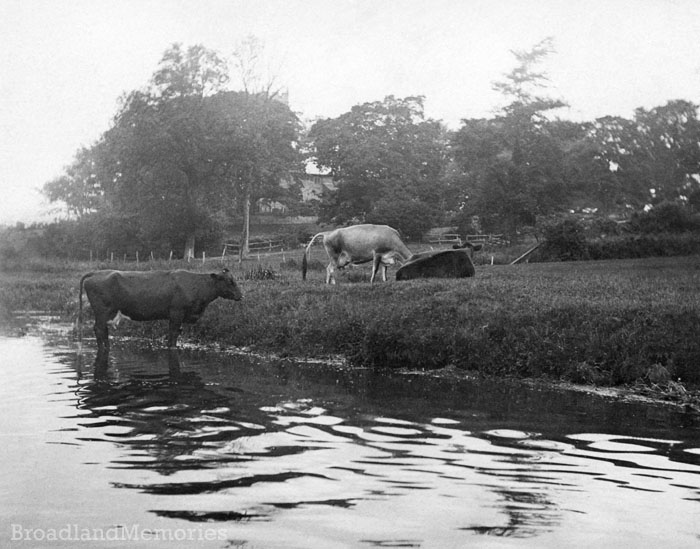
“Cattle near Wroxham Church” – “From Yarmouth to Wroxham Bridge the Bure is, as East Anglian rivers go, a fairly wide stream; but above the bridge it narrows considerably, though not so much as to make sailing very difficult,” wrote William Dutt in 1903. “The scenery of these upper reaches is decidedly pretty, and between Wroxham and Coltishall the banks are, from June to September, decked with the loveliest waterside wild flowers. After sailing some distance from the bridge, a stranger may well be surprised that the church he sees standing on a hill by the riverside is Wroxham Church; but the mystery is explained when he is told that a considerable portion of what is generally known as Wroxham is situated in the parish of Hoveton St. John, and that the parish of Wroxham lies west of the bridge.”

“Goats at Coltishall” – The maltings which stood beside the Rising Sun pub at the end of the common. These were originally owned by the Coltishall Brewery and Coltishall itself was very much part of the wider brewing industry at one time, with at least 6 maltings in the village. Barley would have been brought in for processing via the River Bure by wherries, some of which may well have been built at Allen’s yard in the village. William Dutt was greatly enamoured by the village in his 1903 guide: “Coltishall, about two and a half miles above Belaugh, is in many respects a delightful place: undoubtedly it is the most picturesque waterside village in Broadland. Unlike Wroxham, it has not been spoilt by the erection of unsightly modern houses for the accommodation of visitors; for, in spite of its attractiveness, only a very few yachting parties extend their cruising above Wroxham Bridge. In its fine church, quaint old inns, houses with rounded gables, wherry-

“Coltishall Hall” – The magnificent Coltishall Hall, believed to have been built c1700, it underwent alteration in the 1830s and was given a new, grand façade in the 1870s. It was owned by a succession of local, wealthy inhabitants over the years including Chapman Ives, owner of the Coltishall Brewery, The Norfolk parson Rev. John Micklethwaite and magistrate Richard Rodgers. During WW2 it was taken over by the Royal Army Medical Corps, and post war had a variety of uses including hotel, nursing home and insurance company headquarters. In more recent years, the grade II listed building has been redeveloped, along with the lodge which stood in the grounds, into 13 residential apartments.
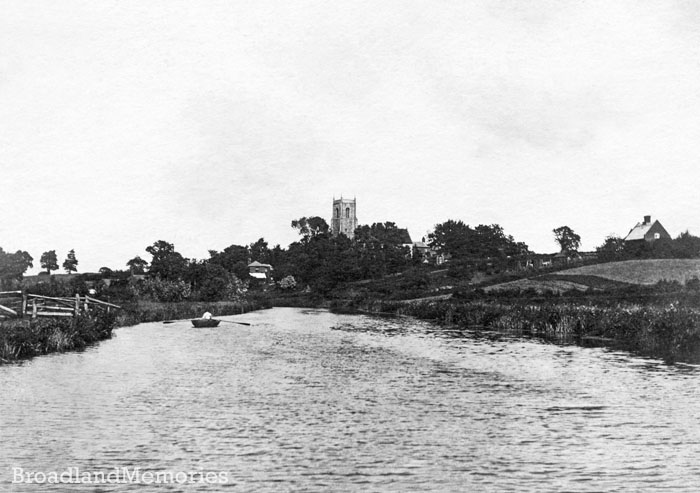
“Belaugh Church” – St Peter’s Church at Belaugh.